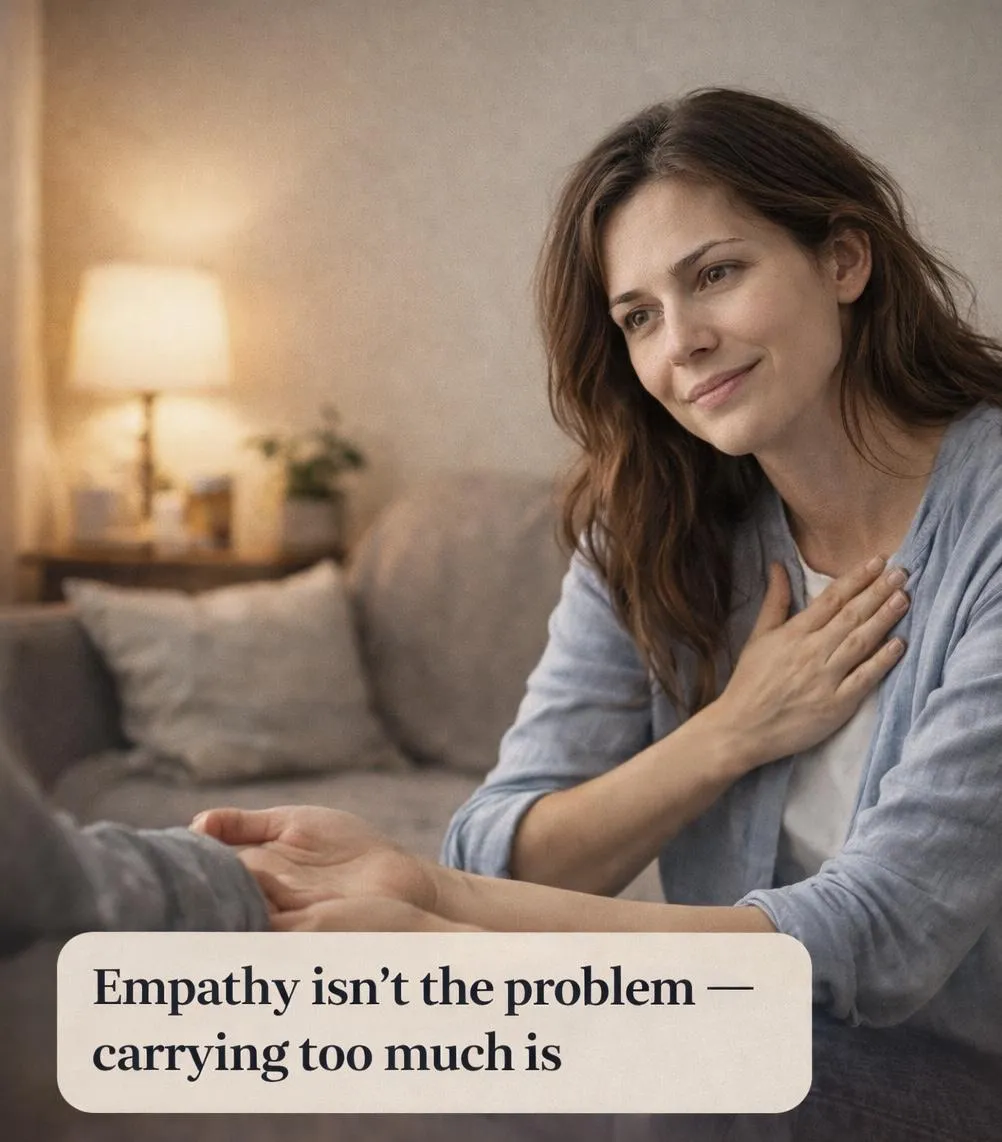
Empathy Isn’t the Problem — Carrying Too Much Is
Caregivers are often described as compassionate, empathetic, and strong. While these qualities are deeply meaningful, they can quietly become heavy when empathy is constant, unprotected, and rarely returned.
Most caregivers don’t burn out because they don’t care.
They burn out because they care continuously, without enough rest, boundaries, or support.
This month, we’re reframing empathy — not as self-sacrifice, but as understanding that includes you.
When Empathy Becomes Heavy

Empathy allows us to recognize what someone else is experiencing. For caregivers, however, empathy often shifts into emotional carrying.
You may notice this when you:
Feel responsible for everyone else’s emotions
Absorb stress the moment you walk into a room
Push your own needs aside because someone else “needs it more”
Over time, empathy stops feeling connective and begins to feel exhausting. This isn’t a personal failure — it’s a sign of sustained emotional load.
Empathy vs. Emotional Carrying
Many caregivers were never taught the difference between empathy and over-responsibility.
Empathy is understanding and presence.
Emotional carrying is absorption and responsibility.
When empathy turns into carrying, caregivers often:
Anticipate needs before they’re spoken
Manage reactions and moods
Feel guilt when resting or stepping back
These patterns often develop as survival skills — ways to keep things stable, calm, or predictable. They are understandable, but not sustainable.
The Cost of Carrying Too Much

Unboundaried empathy impacts both emotional and physical health. Caregivers may experience:
Chronic neck or head tension
Mental fatigue or emotional numbness
Irritability or withdrawal
A gradual loss of identity
Burnout is not a lack of compassion.
It’s a signal that capacity has been exceeded.
Empathy With Boundaries: A Sustainable Shift
Sustainable empathy allows you to care without disappearing.
It can sound like:
“I can listen without fixing.”
“I can care and still rest.”
“I can support without absorbing.”
A grounding reminder many caregivers find helpful:
“I can care deeply without carrying everything.”
Empathy in Healthcare Advocacy
Healthcare systems prioritize efficiency, which can leave families feeling rushed or unheard. Empathy in advocacy means slowing conversations down and translating medical information into human language.
Simple, clear questions can shift outcomes:
“Can you explain that in plain language?”
“What are the options?”
“What happens next, and who is responsible?”
Advocacy is empathy in action — guided, clear, and protective.
Empathy Essentials: Supporting the Nervous System

Empathy lives in the nervous system. When that system is overloaded, even compassion can feel draining.
Caregivers often remain in a heightened state of alert — scanning for needs, anticipating reactions, and holding emotional space. Over time, this makes regulation difficult.
Gentle, sensory-based practices can help restore balance.
Commonly used oils for emotional regulation include:
Frankincense — grounding and centering
Copaiba — calming and supportive of emotional balance
Lavender — easing emotional overload
Balance — encouraging steadiness and inner calm
Simple practice:
Place one drop of your chosen oil in your hands and rub them together.
Inhale slowly and ask, “What do I need in this moment?”
Rest your hands gently on the back of your neck and allow your breath to slow.
No fixing. Just listening.
Closing
Empathy was never meant to cost you yourself.
Support is not a failure — it’s part of sustainable caregiving.
If this resonates, February’s masterclass offers space to explore these themes with guided reflection, practical advocacy tools, and nervous-system support. Register Here.
You don’t have to carry everything alone.
